
Sometimes when traveling with a group, I revert back to my 13-year-old self. It’s not a pretty sight.
If you’ve ever sat on a bus with 14 strangers wondering why everyone else seems to have found their person and you haven’t, this post is for you. Below are seven things that genuinely help, what to do on the first day of a group trip, the questions to ask before you book one, and how to tell when a group trip isn’t the right shape for you at all.
TL;DR
Not fitting in with a travel group is common, it’s rarely about you, and it’s fixable within the trip you’ve already paid for.
What to do when you don’t fit in with a group
Stop working the whole group and work one person instead. Connection happens in twos, over a coffee or a slow stretch of trail, almost never across a dinner table of twelve.
The single best first-day move
Ask someone a question only they can answer. “What made you pick this trip?” starts a real conversation. “Where are you from?” starts a roll call.
Is it normal to want time alone on a group trip?
Completely. Most group itineraries have more free time than the brochure suggests. Taking an afternoon on your own isn’t antisocial, it’s maintenance.
What if you already know groups aren’t your thing?
Then book a trip that isn’t one. A self-guided hiking tour gives you the route, the accommodations and the luggage transfers without the group, and you hike with whoever you came with.

My Story of Not Fitting In as a Teenager
When I was 13 I was a loser. Or more accurately, my peers perceived me as one, and figuratively strapped a capital “L” to my head. I didn’t get why I didn’t fit in. I was just painfully aware that I didn’t.
My wardrobe was built around two core staples: a pastel pink sweatshirt covered in sheep, and a red one covered in cats strumming banjos. The look was finished with huge owl-like glasses that covered half my face. I was tall for a 13-year-old, 5 ft 8 in (173 cm), and skinny without the grace of a supermodel. I frequently ran into objects that weren’t even directly in front of me.
That lack of coordination didn’t stop me trying out for the basketball team. To nobody’s surprise, I didn’t make the cut.
It may be painfully obvious to you why I didn’t fit in. It wasn’t to me. Yes, I was shy, but I was also kind, loved animals (so much that I wore them plastered across my chest) and loved to read. I cycled, I swam, I’d just given up figure skating. I was reasonably intelligent. In other words, I had a range of interests and I was, well, nice. Shouldn’t that be enough? Apparently not.
Or perhaps it was, and my fellow 13-year-olds just didn’t see it. Deanna Aker did. Deanna was the co-basketball coach, a few years older than me, pretty, peppy and most importantly popular. She was also really kind.
When the yearbooks came out that thorny year, I mustered the courage to ask her to sign mine. Having Deanna sign it would show the world, or at least my 7th-grade class, that I wasn’t a complete loser. She not only agreed, she left a line that changed the way I saw myself.
Keep on smiling that pretty smile of yours, one day it’s going to break lots of hearts.
Someone had seen past the owl glasses, the animal-print sweatshirts and the lanky gait. Almost 30 years later those words still bring tears to my eyes.
The Realities of Group Travel
Traveling with a group can give you that instant chemistry, the I-can’t-believe-we-just-met, I-feel-like-I’ve-known-you-forever kind. I love it when that happens, and I’ve been lucky enough to have it happen on plenty of trips.
Then there have been the other trips. The ones where I don’t connect with anyone, where a rock would appear more interesting than whatever it is I have to say. Where I revert to feeling like my 13-year-old self.
And I still sometimes can’t see why. The difference now is that it bothers me that I care, about a group of strangers I’ll most likely never see again. At 13 I was supposed to want to fit in. That’s normal for a teenager. As an adult I should know better, so on top of feeling like an outsider, I’m busy chastising myself for caring. It’s a no-win situation.
I’ve had to work hard to accept feeling like an outsider on some group trips, and harder still to embrace it. It still gets the better of me sometimes. The seven strategies below are what actually help. Nobody should feel like a loser, and especially not on vacation.

7 Ways to Cope With Group Travel When You Don’t Fit In
1. When You Don’t Fit In, It’s Not You and It’s Not the Group
You can’t control how people treat you, but you can control how you react. If a situation is genuinely abusive, stand up for yourself. In group travel it’s usually far more subtle than that: being left out of conversations, or telling a funny story to complete silence. That stings. I’ve been there, and it’s happened even when the joke was funny.
You don’t have to retaliate by muttering that you’re surrounded by idiots too stupid to understand your really funny joke. Note that the joke has now gone from funny to really funny. That won’t make you feel better. Trust me, I’ve tried it.
Instead, accept that you’re simply not connecting. That’s it. You’re not going to connect with everyone you meet, and that’s all that’s happening here. You’re not a loser and neither are they. You’re two or more people who aren’t clicking, who happen to be traveling as a group.
2. Connect With Individuals Away From the Group
This is the single most useful thing on the list. You may not click with a group as a whole and still click with one or two people in it, once you get them away from the others. I found this on a recent 10-day trip and it changed how much I enjoyed the whole thing.
I didn’t enjoy the group dynamic. I did enjoy a conversation with a couple of individuals away from it, even when it was only 10 minutes long. Groups of more than about six stop being a conversation and start being an audience. Twos and threes are where anything real happens, so go looking for twos and threes.
3. You Might Not Connect With Who You Expect to on a Group Trip
When I hiked to Everest Base Camp with a group there were a few women around my age, and I assumed I’d bond deepest with one of them. Instead the person I connected with most was a 22-year-old Swiss male journalist.
It was the same in my hiking group back in Calgary. Often the person I clicked with was 20 years my senior, even with people my own age in the room.
On my first diving live-aboard there was a German guy I avoided for an entire day because I thought he looked grumpy. I surrounded myself with the people who looked happier instead. I ended up with that grumpy German guy for nine and a half years. I’m only loosely in touch with one other person from that trip.
Be open to everyone on a group trip. You may be surprised who you connect with, and how much richer your life is for it.

4. Don’t Try to Fit In When Traveling With a Group If You Don’t
If you really don’t fit in after giving it your best shot, stop trying. You’ll reek of desperation and it only pushes people further away.
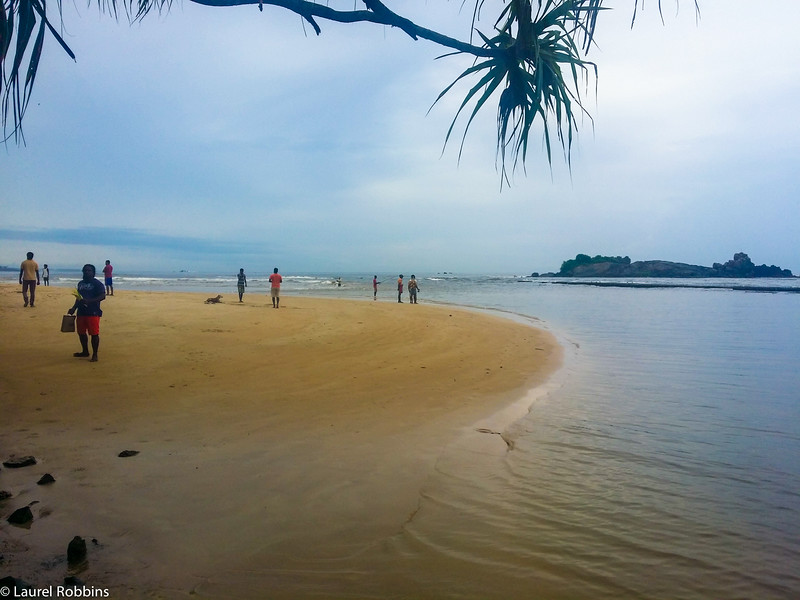
I came to this realization at an Ayurveda retreat in Sri Lanka. I was alone with a lot of time on my hands, since besides the treatments you’re supposed to relax. A lot. That was hard enough for me, so I compensated by trying to make friends: an English lady and a Swiss lady, both there alone, both apparently having a grand time together. I love fun too. We could be the three musketeers.
So I asked the Swiss lady if she’d like to have dinner. We were both dining alone at separate tables and I thought she’d be delighted. She said, “No, I’d prefer to have dinner alone.” I was crushed.
I’m ashamed to admit my silent response was to reassure myself that she’d recently been fired and was struggling to find work, so she probably felt worse about herself around me. I knew she’d been fired. I had no idea about the rest.
After a couple of hours of feigned superiority, which did nothing, I realized her saying no was a blessing. Instead of passing a week with two women I had little in common with and would never see again, I could use it to get to know a more relaxed version of myself. It wasn’t easy, and I’ll admit to being bored at times. It ended up far more enriching than small talk would have been.
5. Acknowledge How You Feel, Then Get On With Enjoying the Trip
We’re social creatures. It’s natural to need connection. Acknowledge that you don’t like feeling like an outsider, then move on. Easier said than done, I know. It’s like being told not to be afraid of the dentist, which has kept me away for over five years.
But trying to engage people who have no interest in you is demoralizing, and you don’t need that on vacation. Shift your focus instead. Get lost in the book you’ve meant to read for years on the long bus rides, like Mindy Kaling’s Is Everyone Hanging Out Without Me? Rather appropriate, don’t you think?
Explore on your own where that’s an option. Visit the museum, take the solo hike, wander the streets. You’ll create longer-lasting memories than you will trailing the group around something that only mildly interests you.
6. You’re Probably Not the Only Outsider on the Group Trip
It’s easy to think poor me, I’m the only one who doesn’t fit in. That’s a waste of your vacation, and it’s probably not true.
At a travel blogging conference a few years ago, someone I’d only ever met online came up to me. When I said it was great to meet her in person, she burst into tears. I was the first person who knew who she was. Everyone else she’d introduced herself to had no idea. I had a similar experience at my first blogging event and it was devastating.
I asked her to join the table I was sitting at for lunch, and her baffled answer was, “You’d let me sit with you and the other speakers?” We’ve all been there and it’s awful. At least you know you’re not alone in it.
And when you do find yourself in the in-crowd, as I finally did at that conference, be kind. It may be appreciated more than you’ll ever know. It might be you without a place to eat lunch next time.

7. The Only Person Who Can Make You Feel Like a Loser Is You
You might have wished for a group that felt like best friends by day two, and I genuinely wish that for you. I love it when it happens.
If it doesn’t, and you’re the outsider, don’t let anyone make you feel like a loser. You get to choose your reaction. Someone doesn’t laugh at your joke? Their loss. You don’t need a travel group’s validation to know you’re special. You might think you do. You really don’t.
Choose to believe you’re special, and yes perhaps different, and then celebrate it. Don’t wait for a Deanna Aker to show up. Be your own Deanna. Keep on smiling that pretty smile of yours, one day it’s going to break lots of hearts.
How to Travel With a Group of Strangers
Most group trips are decided in the first 48 hours. People pair off, seats on the bus get claimed, and by day three the shape of the group is set. Here’s what actually moves the needle in that window.
- Ask a question only that person can answer. “What made you pick this trip?” or “What’s the best thing you’ve hiked?” gets you a story. “Where are you from?” gets you a country and a pause.
- Move seats every day. On the bus, at dinner, at breakfast. One rotation gets you in front of everyone inside three days, and it costs nothing.
- Volunteer for the small jobs. Counting heads, carrying the group first aid kit, holding the map. It gives you a reason to speak to everybody and a role that isn’t “the quiet one”.
- Walk beside people, not across from them. Side by side is easier than face to face, which is why so many good conversations happen on a trail and so few happen at a table for twelve.
- Take the first morning off the social hook. Jet lag plus a new group is a bad combination. Nothing you feel on day one is a reliable read on the rest of the trip.
- Give it until day three before you conclude anything. Groups re-sort themselves more than they look like they will.
- Then take an afternoon alone, guilt free. Needing time to yourself on a group trip is normal, not rude.
What to Ask Before You Book a Group Trip
Most of the misery in group travel is designed in before anybody leaves home. Ask these six questions before you pay, and you’ll avoid most of it.
| Ask | Why it matters |
|---|---|
| How many people, maximum? | Under 12 and everyone eventually speaks to everyone. Over 16 and cliques form by default, whoever is on the trip. |
| What’s the age range, honestly? | A good operator will tell you the typical spread rather than the permitted one. A 25-to-70 group is a very different week from a 45-to-60 one. |
| How many will be solo? | One solo traveler among six couples is a hard week. Three or four solos and you have a sub-group from the first dinner. |
| Am I sharing a room with a stranger? | Forced room-sharing to dodge the single supplement is the number one regret people report. Price the supplement before you decide. |
| How much free time is there? | Free afternoons are the pressure valve. A trip with none is a trip you can’t step out of when you need to. |
| Can I hike at my own pace? | On a hiking trip this is the whole thing. Being the slowest in a group that waits for you is its own kind of not fitting in. |
When a Group Trip Isn’t the Answer
Everything above assumes you want the group to work. Sometimes the honest answer is that you’d have a better time without one, and that’s worth saying out loud rather than booking another group trip and hoping the chemistry is better next time.
Group tours exist because of what they solve: somebody else handles the route, the hotels, the bags and the logistics. The group is the price you pay for that, not the point of it. A self-guided hiking tour gives you the same solved logistics without the group. We book the accommodations, move your luggage between them, send you the GPS tracks and route notes, and you hike with the people you came with, at the pace you feel like that day. If you’d rather have a guide and a group, that’s a good trip too. It just shouldn’t be the only option you consider.
Connection isn’t a nice-to-have, either. The Harvard Study of Adult Development, which has followed the same families since 1938, keeps landing on the same finding: close relationships predict health and happiness better than almost anything else. Which is a decent argument for traveling with the people you already love, rather than hoping to manufacture it with 15 strangers on a bus.

Group Travel FAQs
Is it awkward joining a group tour if you don’t know anyone?
The first day usually is, and then it isn’t. On almost every group tour a good portion of the group has come alone, so nobody arrives with an established circle. The awkwardness peaks at the first dinner and drops sharply once people have hiked or traveled together for a day. If you want to shorten it, ask people what made them pick this particular trip rather than where they’re from, and change where you sit each day.
What happens if you don’t get along with your group on a tour?
Nothing formal happens, and no operator will move you to another group mid-trip, so the fix is in your own hands. Stop trying to win the whole group and find the one or two people you do click with away from it. Use the free time to go off on your own without apologizing for it. If it’s a specific person rather than the group, tell the guide quietly: they deal with this more often than you’d think and can change seating, room allocations and hiking pairs without making it obvious.
How do you travel with a group of strangers?
Treat the first 48 hours as the whole job. Ask open questions that only that person can answer, move seats at every meal and on every transfer, volunteer for small group tasks so you have a reason to speak to everyone, and walk beside people rather than sitting opposite them. Give it until day three before you draw any conclusions, because groups re-sort themselves more than they look like they will. Then take an afternoon alone without guilt.
Is it normal to want time alone on a group trip?
Yes, and it’s close to universal. Days in a group are socially expensive even when you like everyone, and most people need a couple of hours off to reset. Nobody will think less of you for skipping one optional activity to read in a cafe. If an itinerary has no free time at all, that’s worth knowing before you book rather than after.
What should you ask before booking a group trip?
Six things: the maximum group size, the typical age range rather than the permitted one, how many people will be traveling solo, whether you’ll be sharing a room with a stranger to avoid the single supplement, how much genuinely free time there is, and on a hiking trip whether you can go at your own pace. Group size matters most. Under 12 and everyone eventually speaks to everyone; over 16 and cliques form regardless of who is on the trip.
What’s the best group size for a travel group?
Between 8 and 12 for most trips. That’s small enough that the group can share one table and one conversation, and large enough that you’re not stuck with a single person you don’t click with. Above about 16, the group splits into sub-groups within days and it becomes much harder to join one late. Below about 6, one mismatch can define the whole week.
What are the alternatives to a group tour?
A self-guided tour is the main one. The operator books the accommodations, moves your luggage between them and gives you the route in GPS tracks and written notes, but there’s no group and no guide, so you travel with whoever you came with, at your own pace. It suits people who want the logistics handled but not the social contract. The other alternatives are a private guided trip for your own group, which costs more, or planning it entirely yourself, which costs time.
Should you travel with a group if you’re an introvert?
You can, but choose the trip deliberately. Look for a small group, single rooms rather than shared, and an itinerary with real free time, which together remove most of what makes group travel exhausting for introverts. An activity-based trip is also easier than a sightseeing one, because hiking gives you hours of side-by-side conversation and a legitimate reason to push ahead or drop back when you need quiet. If none of that appeals, a self-guided trip gets you the same destination without the group.
Related Reading
- Guided vs Self-Guided Hiking Tours: Which One Is Right for You
- Self-Guided Hiking Tours in Europe
- The Best Hikes in Europe
- Top 5 Benefits of Hiking With Friends
- Hiking to Everest Base Camp, Day by Day
- What Is Ayurvedic Medicine? A Week at a Retreat in Sri Lanka
Follow these seven tips and group travel gets easier and more enjoyable, even on the trips where you don’t connect with anyone. And if you work out that groups just aren’t your shape, that’s not a failure either. It’s just information about what to book next time.
