Choosing between a Banff elopement in winter or summer depends on your ideal wedding experience. Summer brings wildflower trails, long daylight, and easy access; winter offers snow-draped solitude and dramatic alpine stillness. Each season has distinct advantages and logistical needs. Understanding the pros and cons of summer vs winter elopements — and how to prepare for a mountain ceremony — helps you decide what season truly reflects your story.
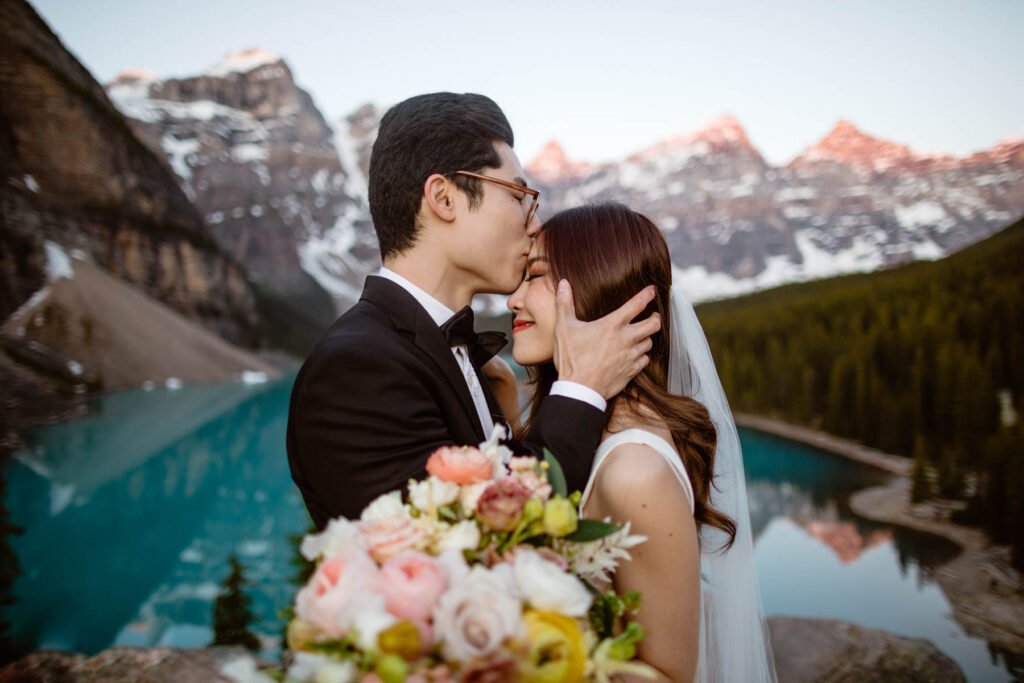
Elopements here aren’t just about saying “I do” — they’re about embracing the raw beauty of the Canadian Rockies on your terms. And while the scenery stuns year-round, the experience of a summer elopement differs vastly from a winter one.
To bring your vision to life — no matter the season — you’ll want someone who knows the terrain, the light, and the hidden corners of the park. That’s where a seasoned Banff elopement photographer becomes invaluable, offering more than just photos: they’re your local guide, planner, and calm presence in the wild.
Summer vs. Winter in Banff: A Detailed Comparison
Deciding between a Banff elopement in winter or summer isn’t just about preference — it’s about aligning your expectations with what each season genuinely offers. Both bring magic, but in vastly different forms. Let’s break it down across four key dimensions: weather and access, visual atmosphere, crowd dynamics, and practical preparation.
Weather and Accessibility
Summer (June to early September) delivers mild temperatures, typically ranging from 10°C to 22°C. Trails are clear, alpine passes open, and remote lakes like Moraine or Lake Louise are easily reachable by shuttle or car. Road closures are rare, and daylight stretches past 9 p.m., giving you generous time for photos, hikes, or relaxed moments.
Winter (December to March), by contrast, brings sub-zero temperatures — often dipping below –15°C — and heavy snowfall. While iconic spots like Vermilion Lakes or Johnston Canyon remain accessible, higher-elevation locations may require snowshoes, skis, or guided transport. Some roads close seasonally, and daylight fades by 5 p.m., tightening your timeline. That said, fresh snow transforms even familiar paths into serene, storybook settings few get to witness.
Scenery and Photo Opportunities
Summer bursts with life: wildflowers carpet meadows, glaciers feed vivid blue lakes, and golden hour glows for hours. It’s ideal if you crave dynamic backdrops — think flowing dresses against turquoise water or barefoot vows on sun-warmed rock.
Winter offers minimalist elegance. Snow-laden pines, frozen waterfalls, and mist rising off icy lakes create a monochrome palette punctuated by warm layers and soft light. Overcast skies diffuse sunlight beautifully, reducing harsh shadows — a subtle advantage for natural-looking images. For couples drawn to quiet intimacy over vibrant energy, this season speaks volumes.
Crowd Levels and Privacy
Peak summer months draw global visitors, especially to hotspots like Lake Minnewanka or Sulphur Mountain. While you can still find solitude with strategic planning (e.g., sunrise ceremonies or lesser-known trails), sharing the view is common.
Winter flips the script. With tourism at its lowest, you’ll often have entire overlooks to yourselves. This solitude isn’t just romantic — it allows for unhurried moments and authentic reactions, free from onlookers or background chatter. If privacy tops your priority list, the colder months deliver generously.
To help visualize the trade-offs, here’s a quick-reference table:
| Factor | Summer | Winter |
|---|---|---|
| Avg. Temperature | 10°C – 22°C | –5°C to –20°C |
| Daylight Hours | 15–16 hours | 8–9 hours |
| Trail Accessibility | High (most areas open) | Moderate (snow gear often needed) |
| Scenery | Lush greenery, wildflowers, blue lakes | Snow-covered peaks, frozen waterfalls |
| Crowd Levels | High (especially July–August) | Very low |
| Photo Style | Bright, vibrant, dynamic | Soft, moody, intimate |
| Packing Complexity | Light and simple | Layered and technical |
Understanding these contrasts helps clarify what truly matters to you: Is it golden-hour grandeur or snow-silent stillness? Adventure under open skies or warmth shared in a cold hush? The answer shapes not just your day — but how you prepare for it.
How to Prepare for a Mountain Elopement
Eloping in the Canadian Rockies is as much about preparation as it is about passion. The rugged beauty of Banff demands respect — and a well-thought-out plan — to ensure your day unfolds smoothly, safely, and authentically. Whether you’re drawn to alpine meadows or snow-blanketed ridges, these foundational steps will set you up for success.
Secure Permits and Understand Park Rules
Banff National Park requires a Special Use Permit for all wedding ceremonies, including elopements. This applies year-round and covers everything from vows at Lake Louise to a quiet exchange on a backcountry trail. Apply through Parks Canada at least six weeks in advance, especially during peak hot months when processing times slow.
Be aware that some locations — like Moraine Lake — are restricted for ceremonies due to ecological sensitivity or visitor volume. Your chosen spot must also comply with group size limits and noise guidelines. A quick consultation with a local vendor or photographer familiar with park regulations can save you from last-minute surprises.
Plan Logistics Around Seasonal Realities
Transportation, timing, and accessibility shift dramatically with the seasons. In summer, shuttle reservations to popular lakes are essential, and afternoon thunderstorms can roll in fast — plan your ceremony for morning or early evening. In winter, road closures, limited daylight, and avalanche risk in certain zones require extra caution.
Always have a backup location within 20–30 minutes of your primary spot. Share your full itinerary — including parking coordinates and return time — with a trusted contact, and consider carrying a satellite messenger if you’re heading off-grid.
Choose Attire That Balances Style and Function
Mountain terrain doesn’t care about formalwear — but you can still look and feel like yourselves while staying practical.
- Opt for fabrics that move with you: lightweight linen or crepe for summer; wool blends or thermal-lined layers for winter
- Select footwear with grip and ankle support — stilettos sink in gravel, and dress shoes slip on ice
- Consider a second outfit for portraits or post-ceremony exploration (e.g., a cozy sweater and boots for winter, or hiking sandals for summer)
- Bring a small emergency kit: safety pins, fashion tape, stain wipes, and a compact steamer or wrinkle-release spray
Many couples tuck bouquets into backpacks or use magnetic boutonnieres to keep hands free on the trail — small adaptations that make a big difference.
Pack Smart for Comfort and Safety
Beyond rings and vows, what you bring impacts your experience more than you’d think.
Hot season essentials:
- Reusable water bottle and high-energy snacks
- Sun hat, sunglasses, and reef-safe sunscreen
- Insect repellent (especially near wetlands or forests)
- Lightweight blanket for seated moments
Cold season must-haves:
- Insulated seat pad or foldable camp stool (cold ground drains warmth fast)
- Hand and toe warmers (tuck them into pockets or boots before heading out)
- Thermos with warm tea, cider, or broth
- Extra camera batteries (cold reduces battery life by up to 50%)
Even in mild conditions, mountain weather changes quickly. A compact rain shell or windbreaker belongs in every elopement pack.
Final Thoughts: So What Season Is Best for a Banff Elopement?
Ultimately, the ideal time for your Banff elopement hinges on the experience you want — not just the scenery you prefer. Summer offers warmth, accessibility, and vibrant backdrops, while winter delivers solitude, stillness, and a dreamlike alpine palette. Both require thoughtful preparation, from permits to packing, and benefit from local insight.
If you value long days and wildflower trails, summer may call to you. If you’re drawn to quiet snowscapes and intimate moments under steel-gray skies, the cold season could be your match. There’s no universal “best” — only what feels most true to your story. And no matter when you go, a Banff elopement in winter or summer remains a powerful testament to love meeting landscape in one of the world’s most awe-inspiring places.
Where to Stay in Banff
Use the map below to find a place to stay in Banff. Zoom out to widen the search.