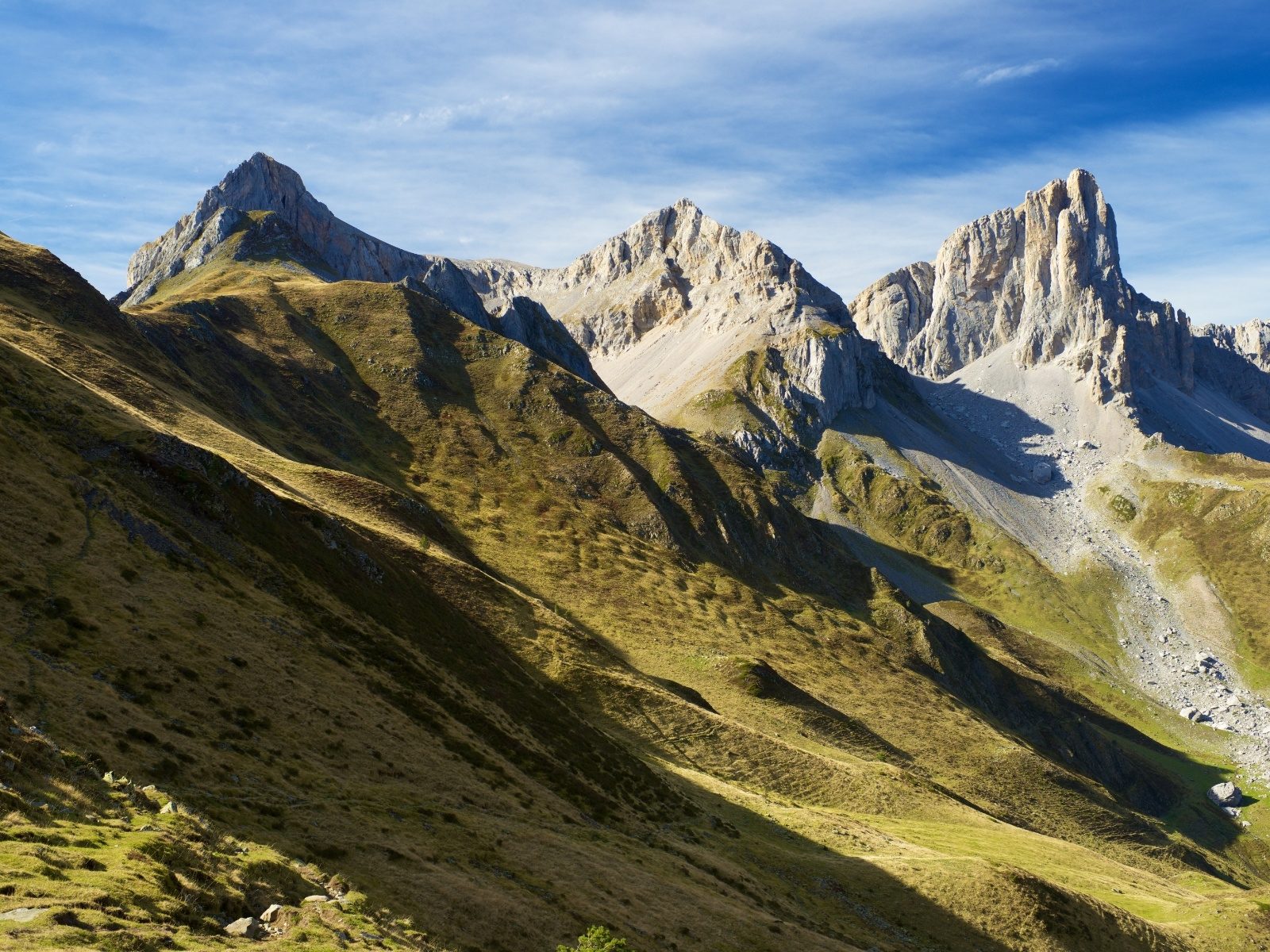
The Alps are the more famous range internationally, and the Pyrenees are the one with the space. They run 430 km (270 miles) from the Atlantic to the Mediterranean, they have their own 3,000 m (9,800 ft) peaks, their own glacial lakes, their own ibex, and three of the longest waymarked trails on the continent. And on a July morning on a high col here, you’ll often have the view to yourself.
The catch is that nobody tells you where to start. “Hiking in the Pyrenees” covers everything from a 45-day unwaymarked traverse to a gentle week based in mountain villages. This guide sorts the Pyrenees hiking routes by how long you’ve actually got, so you can find yours and book it.
TL;DR: the best multi-day hiking routes in the Pyrenees
If you have a week, hike the Catalan Pyrenees or Andorra. If you have five days and want huts, hike the Carros de Foc or the Coronallacs. If you have a month or more, hike the GR11, the GR10 or the HRP.
Best multi-day hike in the Pyrenees for a first timer
The Catalan Pyrenees from Camprodon to the Vall de Núria: 84.6 km (53 miles) over 6 hiking days, sleeping in village hotels rather than dormitories, with the warmest climate in the whole range.
Best Pyrenees hiking route for high peaks and lakes
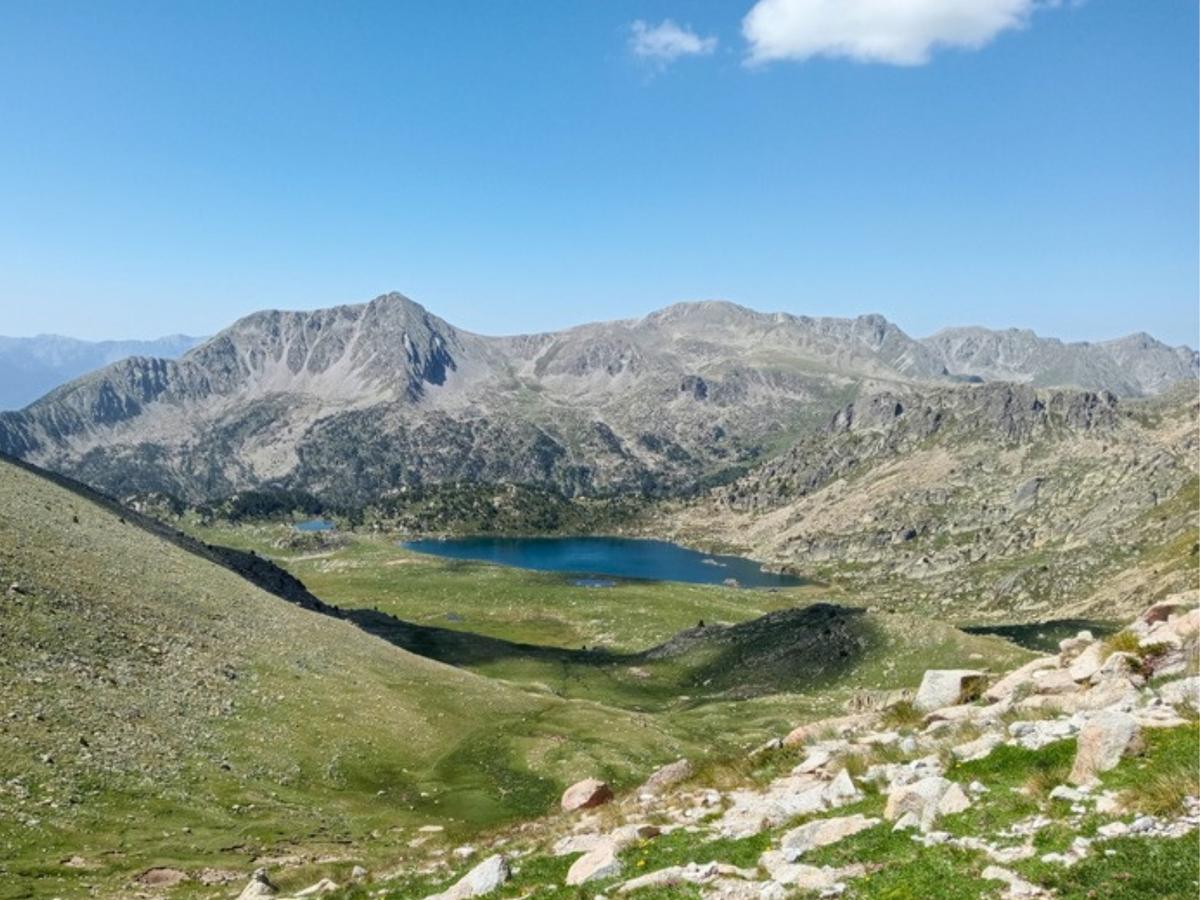
Andorra. Six hiking days, a glacial lake on five of them, a UNESCO valley no road reaches, and Comapedrosa at 2,942 m (9,652 ft).
The three great long-distance trails
The GR11 runs the Spanish side for about 840 km (520 miles). The GR10 runs the French side for about 900 km (560 miles). The HRP runs the high ground between them for about 750 km (465 miles) and is unwaymarked.
Best time for hiking in the Pyrenees
Mid-June to late September for the high routes, once the snow has cleared the cols. The eastern valleys stretch from April into November, which is why our two tours there run far longer than the central Pyrenees allow.
Highest peak in the Pyrenees
Aneto, 3,404 m (11,168 ft), in the Maladeta massif on the Spanish side.
What a hiking week in the Pyrenees costs
Our 8-day self-guided Catalan Pyrenees tour starts at €1075 and our 8-day Andorra tour at €1195, with hotels, luggage transfers and a training plan included. That is less than half what a comparable week costs on a popular route like the Tour du Mont Blanc with private accommodations and luggage transfer.
Where Are the Pyrenees, and Which Side Should You Hike?
The Pyrenees form the border between Spain and France, running from the Atlantic coast at Hendaye to the Mediterranean at Banyuls-sur-Mer, with the tiny country of Andorra sitting high in the middle of the chain. The range is roughly 430 km (270 miles) end to end and holds around 200 peaks above 3,000 m (9,800 ft).
Which side you hike changes the trip more than you’d expect:
- The Spanish Pyrenees are drier, sunnier and more dramatic, with deeper valleys and bigger rock walls. This is where Aneto, Ordesa and the Aigüestortes lakes are.
- The French Pyrenees are greener and wetter, with more cirques, waterfalls and spa towns, and a denser network of refuges.
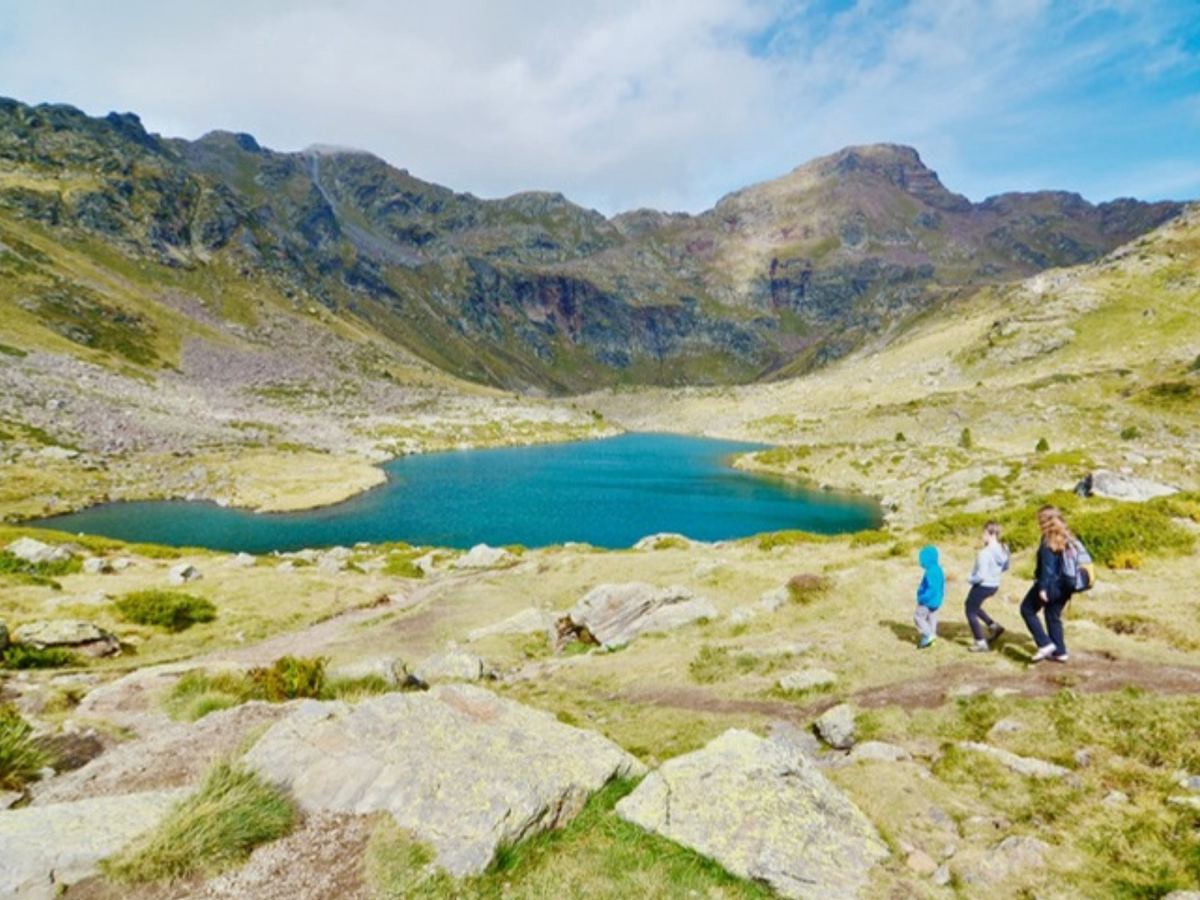
- Andorra packs an entire high range into a country you can drive across in an hour, with more than 60 glacial lakes and the best-value mountain hotels anywhere in the Pyrenees.
- The eastern end, where Catalonia meets the Mediterranean, has the warmest and longest hiking season in the chain.
One thing worth saying up front, because it surprises people: the Pyrenees are not a cheaper, smaller version of the Swiss Alps. They’re a different kind of mountain range. Fewer cable cars, fewer crowds, more wildlife, and villages that are still working villages rather than resorts.

The 3 Great Long-Distance Hiking Trails in the Pyrenees: GR11, GR10 and the HRP
Three trails cross the entire range from sea to sea. They run roughly parallel, they cross each other repeatedly, and hikers mix and match sections of all three. If you’re backpacking in the Pyrenees for a month or more, you’re almost certainly on one of them.
| Trail | Distance | Typical time | Who it suits |
|---|---|---|---|
| GR11 (Spanish side) | About 840 km (520 miles), around 39,000 m (128,000 ft) of elevation change | 5 to 8 weeks | Hikers who want sun, big rock scenery and village stops |
| GR10 (French side) | About 900 km (560 miles), around 53,000 m (174,000 ft) of climbing across roughly 55 stages | 45 to 60 days | Hikers who want a bed and a hot meal most nights, and green valleys |
| HRP (the high route, both sides) | About 750 km (465 miles), staying as high as the terrain allows | 20 to 25 days at speed, 45 days typical | Experienced mountain hikers who can navigate without waymarks and carry a tent |
The GR11: the Spanish Traverse of the Pyrenees
The GR11, or Senda Pirenaica, runs from Cape Higuer in the Basque Country east through Navarre and Aragón to Cap de Creus in Catalonia, staying on the Spanish side almost the whole way. It’s the sunnier traverse, and it links the best of the Spanish high country: the Ordesa canyon, the Aigüestortes lakes and the Maladeta massif below Aneto.
Days are long. The route repeatedly drops into a valley and climbs straight back out, and some stages carry 1,600 m (5,200 ft) of ascent on their own. Most hikers take between five and eight weeks, though fast hikers have done it in three.
The GR10: Hiking in the Pyrenees in France, Coast to Coast
The GR10 is the French answer, running from Hendaye on the Atlantic to Banyuls-sur-Mer on the Mediterranean in about 55 stages of 7 to 27 km (4 to 17 miles). It’s the most sociable of the three, because it drops into a village or a staffed refuge almost every night, so you can hike it without a tent and without carrying a week of food.
It’s also the one with the most climbing, at roughly 53,000 m (174,000 ft) over the full traverse. The middle sections through the Ariège and the Haute-Garonne are the steepest; the Basque opening and the Mediterranean finish are the gentlest.
The HRP: the Haute Randonnée Pyrénéenne
The HRP ignores the border and takes the highest practical line along the crest, crossing between Spain and France dozens of times. It’s about 750 km (465 miles), and it is deliberately not waymarked as a single route, so you navigate it yourself from a guidebook and GPS.
This is the one for hikers who already know what they’re doing on a mountain: sustained days around 1,200 m (3,900 ft) of ascent, long gaps between resupply, and sections where the nearest refuge is a long way down. The reward is the best scenery in the range, hour after hour, and days when you won’t see anyone.
The Best Multi-Day Pyrenees Hiking Routes You Can Hike in a Week
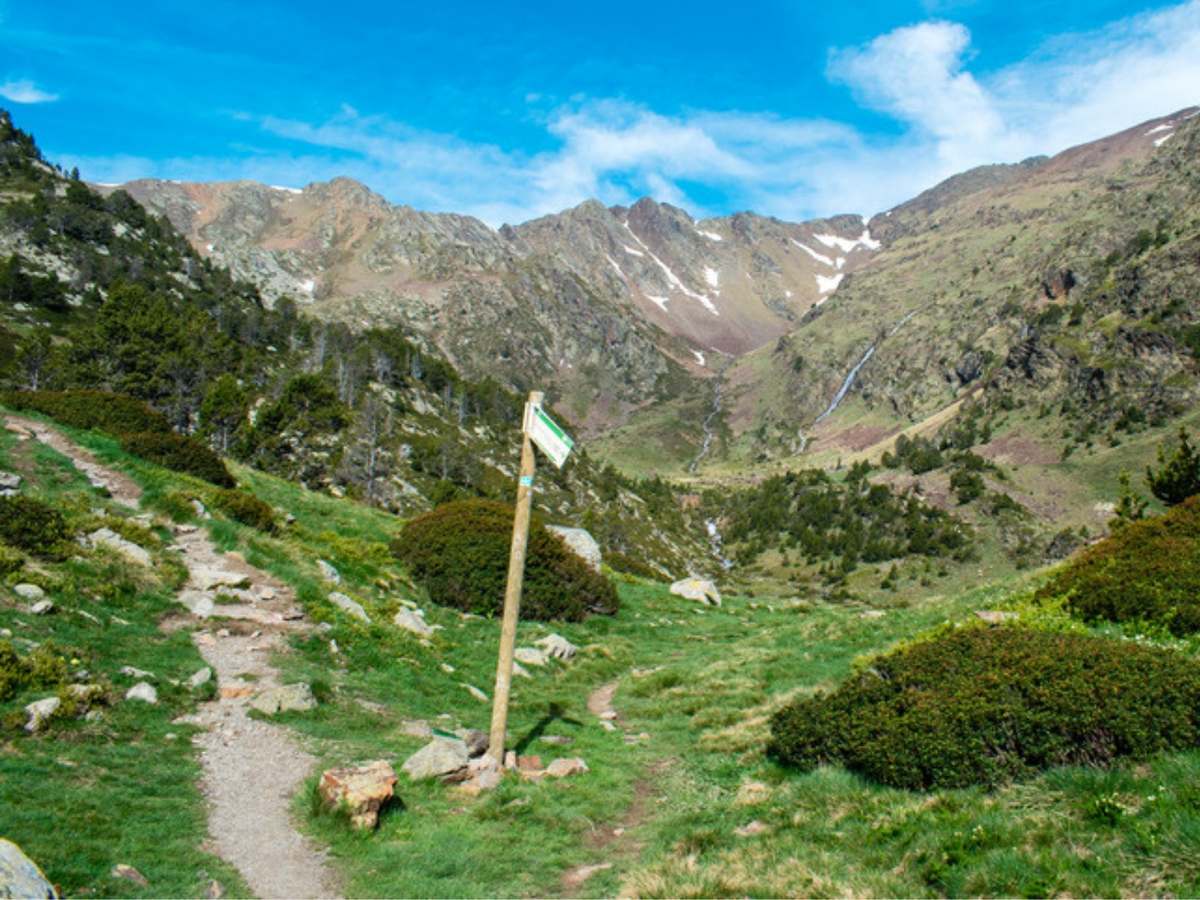
Almost nobody has seven weeks. The good news is that the Pyrenees are unusually well set up for one-week hiking routes, because the range is cut into deep valleys that each hold a complete trip. Here are the four best, and who each one suits.
1. The Catalan Pyrenees: Camprodon to the Vall de Núria
Best for: a first multi-day hiking trip in the Pyrenees, and anyone who’d rather finish the day in a village than a dormitory.
This is the eastern end of the range, where the Pyrenees run down toward the Mediterranean and the climate is the warmest in the whole chain. The route covers 84.6 km (53 miles) over 6 hiking days with 3,831 m (12,570 ft) of ascent, starting from the medieval bridge at Camprodon and working through Molló and Setcases to Ribes de Freser, with a high point at Les Borregues at 2,687 m (8,816 ft).
The finish is the best part. You take the rack railway up to the Vall de Núria, a sanctuary in a hanging valley with no road to it at all, then hike 10.6 km (6.6 miles) down the gorge to Queralbs. It’s the gentlest day of the week and the one people photograph most.
We run this as an 8-day self-guided trip from €1075, with every hotel booked and your luggage moved between them. Full details on the Spanish Pyrenees hiking tour in Catalonia.

2. Andorra: Glacial Lakes, High Peaks and a UNESCO Valley
Best for: hikers who want serious high-mountain days and a summit, without carrying a pack or sleeping in a bunk room.
Andorra is the single most underrated hiking destination in the Pyrenees. It’s a whole country of high mountains that most hikers fly straight over on the way to the Alps, and it’s dense: 71.4 km (44 miles) of hiking over 6 days delivers 5,315 m (17,440 ft) of ascent, a glacial lake on five of the six days, and three summits above 2,870 m (9,400 ft).
The peaks are Comapedrosa at 2,942 m (9,652 ft), which is the highest point in the country, Pic de la Serrera at 2,905 m (9,531 ft) and Pic de Tristaina at 2,876 m (9,436 ft). The quiet day is the best one: the Madriu-Perafita-Claror valley, Andorra’s only UNESCO World Heritage Site, inscribed in 2004 and, in UNESCO’s own words, the last place in the country not to have roads.
Our Andorra hiking tour is 8 days from €1195, and every one of the 7 nights is in a 4-star hotel, which for a high-mountain week in Europe is a price that still surprises us.
3. The Carros de Foc: 9 Refuges in the Aigüestortes National Park
Best for: fit hikers with mountain experience who want a classic hut-to-hut circuit and don’t mind dormitories.
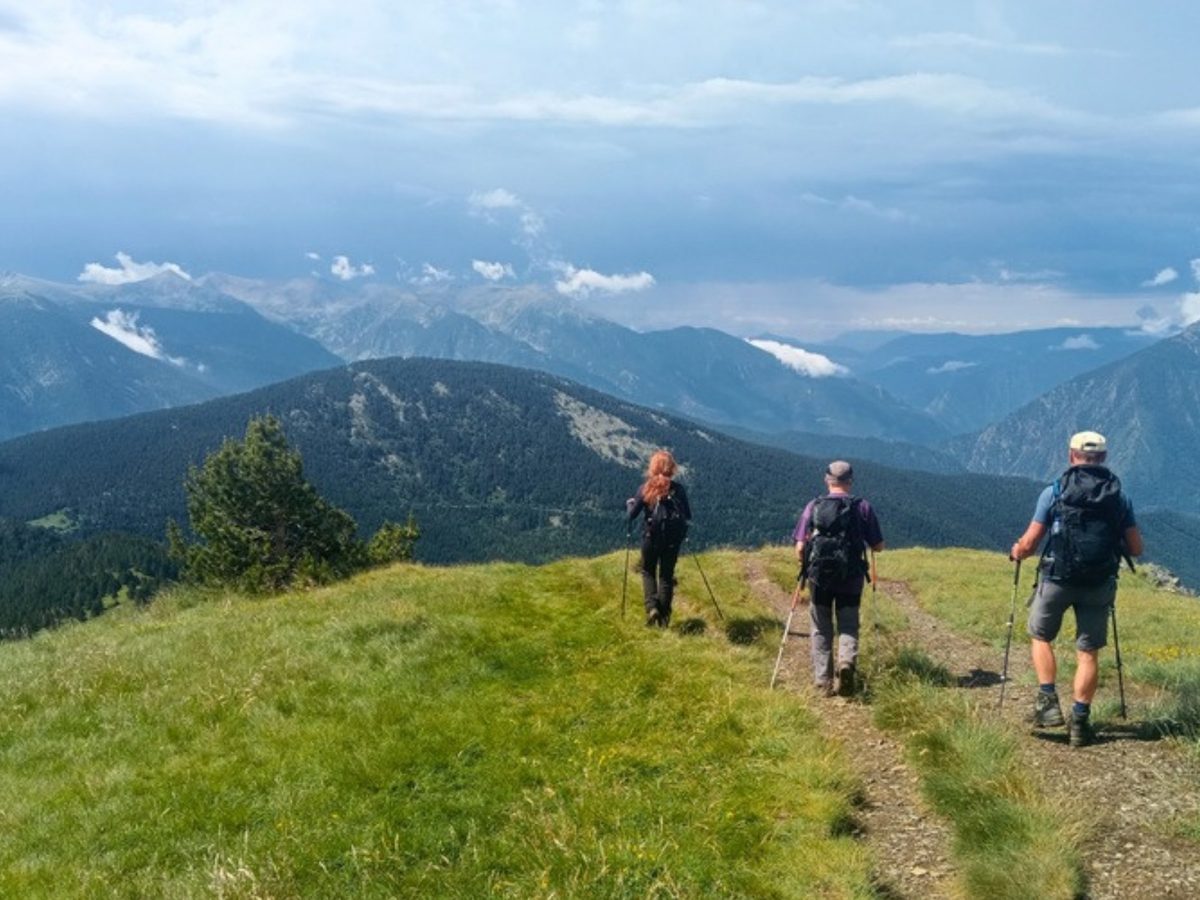
The Carros de Foc links nine mountain refuges inside the Aigüestortes i Estany de Sant Maurici National Park in the Catalan Pyrenees. It exists because in 1987 the refuge keepers decided to go and visit each other, which is a very good reason for a trail to exist.
It’s a circuit of roughly 65 km (40 miles) with more than 3,500 m (11,500 ft) of ascent, usually hiked over 5 to 7 days. The terrain is granite, scree and boulder, the average height is around 2,400 m (7,900 ft), and the highest pass is the Coll de Contraix at 2,745 m (9,006 ft). You sleep in staffed refuges and carry everything you need between them.
4. The Coronallacs: Andorra’s Hut-to-Hut Circuit
Best for: strong hikers who want Andorra’s high country the hard way, with a pack and five big days.
The Coronallacs is a circular route of about 92 km (57 miles) over 5 days, linking Andorra’s staffed refuges at Sorteny, Juclà, l’Illa and Comapedrosa. It takes in more than 20 lakes and crosses the same UNESCO Madriu valley, and it stacks up roughly 6,134 m (20,125 ft) of ascent.
Those are serious numbers for five days: an average of 18 km (11 miles) and over 1,200 m (3,900 ft) of climbing every day, which in practice means 8 to 10 hours of hiking. If you want the same mountains with the days broken up and a hotel at the end of each one, our Andorra tour covers much of the same ground.
Not sure which Pyrenees route fits you?
Answer a few questions about your fitness, your dates and the kind of hiking you like, and our hike finder matches you to a trip in the Pyrenees or anywhere else in Europe.
How Hard Is Hiking in the Pyrenees Mountains?
Harder than people expect, for one specific reason: the valleys are deep and the trails go straight up out of them. A Pyrenees hiking day with modest distance can still carry 900 m (3,000 ft) of ascent, and on the long-distance traverses that figure goes well past 1,500 m (4,900 ft).
What the Pyrenees mostly don’t ask for is technical skill. On the routes in this guide there’s no scrambling, no cables and no ladders. What you need is sure footing on uneven ground, the fitness for a long climb, and decent legs for the descent, which is the part that catches most people out.
Both of our Pyrenees tours are graded Moderate to Challenging, and both come with a free custom training plan built around your actual dates, which is the single best thing you can do between booking and flying.

When Is the Best Time for Hiking in the Pyrenees?
For the high routes, the season is mid-June to late September. Before mid-June the cols still hold snow, and the refuges on the high circuits don’t open until the snow has cleared. After September the staffed refuges start to close and the weather turns quickly at altitude.
The eastern end of the range is the exception, and it’s a big one. The Catalan Pyrenees and Andorra sit lower and warmer than the central high country, so the season stretches a long way either side of summer:
- April and May: green valleys, full rivers and wildflowers lower down. Our Catalan Pyrenees tour runs from April.
- June to August: everything is open, including the high cols and the refuges. Warmest, busiest and best for the lakes.
- September: the sweet spot. Stable weather, quiet trails, and the light starts to turn.
- October: yes, hiking in the Pyrenees in October works at this end of the range. Our Andorra season runs to October 30th and the Catalan one into November.
Mountain Huts or Hotels: Where You Sleep on a Pyrenees Hiking Route
This is the decision that shapes the trip more than the route does, and it’s worth making on purpose rather than by accident.
Refuges put you high in the mountains, which is their whole point: you wake up at 2,200 m (7,200 ft) with the lakes outside the door. They’re also dormitories, usually with shared bathrooms, and they’re where the Carros de Foc, the Coronallacs and most of the HRP put you. Book them early, because the good ones on the popular circuits fill months ahead.
Village hotels mean a private room, a proper shower, dinner you didn’t carry, and the chance to have your luggage moved for you so you hike with a daypack. The trade is that you drop into the valley each evening instead of staying high. Both of our Pyrenees tours are built this way, and in Andorra that means a 4-star hotel every night.
There’s no right answer. There’s just which one sounds like a better week to you.
How to Get to the Pyrenees
Barcelona is the most useful airport for the eastern Pyrenees, Andorra and Catalonia. Toulouse serves the central and French Pyrenees best, and Bilbao or Biarritz put you at the Atlantic end for the start of the GR10 and GR11.
- For the Catalan Pyrenees: the RENFE train from Barcelona Airport Terminal 2B or Barcelona Sants, then the R3 line toward Puigcerdà. Our tour meets you at Ripoll station.
- For Andorra: there’s no airport and no railway station in the country, so almost everyone flies into Barcelona El Prat and takes a direct bus up. It’s around 3 to 4 hours depending on the service.
- For the French Pyrenees: Toulouse, then the train to Lourdes, Pau or Luchon depending on which valley you want.
You don’t need a car for any of the routes in this guide, and on a point-to-point hiking route a car is actively inconvenient, because it’s sitting at the wrong end of the trail all week.
Our 2 Self-Guided Hiking Tours in the Pyrenees
Both of these are self-guided, which means we book every hotel, move your luggage between them, and give you GPS tracks and route notes in an app built for your trip. There’s no guide and no group, so you start when you want and stop at the lake for as long as you want, and you have WhatsApp support the whole way if anything goes sideways.
| Catalan Pyrenees | Andorra | |
|---|---|---|
| Length | 8 days, 6 hiking days | 8 days, 6 hiking days |
| Distance | 84.6 km (53 miles) | 71.4 km (44 miles) |
| Total ascent | 3,831 m (12,570 ft) | 5,315 m (17,440 ft) |
| Where you sleep | Family-run village hotels, 2 to 4-star, one with a spa | 4-star hotels, all 7 nights |
| Season | April to November, plus Spanish Easter week | May 1st to October 30th |
| From | €1075 per person | €1195 per person |
| Pick this one if | You want villages, the longest season and the Vall de Núria finish | You want summits, glacial lakes and the UNESCO valley |
Hiking in the Pyrenees vs the Alps: Why a Week Costs So Much Less
This is the part that surprises people. A self-guided week in the Pyrenees, with private accommodations, luggage moved between them, GPS tracks and route notes, comes in at less than half what the same kind of week costs on a famous route like the Tour du Mont Blanc. Our Catalan Pyrenees tour starts at €1075 and our Andorra tour at €1195, both 8 days.
None of that is a knock on the Alps. The Mont Blanc massif is extraordinary and the price reflects what Chamonix, Courmayeur and the Swiss valleys charge in high summer. The point is that the Pyrenees give you a full high-mountain week, glacial lakes and 2,900 m (9,500 ft) summits included, for what a long weekend costs in the better-known ranges. It also makes the Pyrenees the easier place to say yes to a longer trip.
Hike the Pyrenees with everything booked for you
Hotels, luggage transfers, GPS tracks, route notes and a free custom training plan. You just hike.
Hiking in the Pyrenees: FAQs
Where is the best hiking in the Pyrenees?
The best hiking in the Pyrenees depends on how long you have. For a week, the best hiking is at the eastern end of the range: the Catalan Pyrenees from Camprodon to the Vall de Núria, or Andorra’s lakes and peaks. For a hut-to-hut circuit, the Carros de Foc in the Aigüestortes National Park and the Coronallacs in Andorra are the two classics. For a full traverse, the GR11 on the Spanish side, the GR10 on the French side and the HRP along the high crest all run sea to sea.
How many days do you need to hike in the Pyrenees?
You need about a week to hike a complete multi-day route in the Pyrenees. Six hiking days is enough to cross a full section of the range, which is what both of our Pyrenees tours do: 84.6 km (53 miles) on the Catalan Pyrenees tour and 71.4 km (44 miles) on the Andorra tour. The hut circuits take 5 to 7 days, and the sea-to-sea traverses take 20 to 60 days depending on the route and your pace.
What is the best multi-day hike in the Pyrenees for a first timer?
The best multi-day hike in the Pyrenees for a first timer is the Catalan Pyrenees route from Camprodon to the Vall de Núria. It covers 84.6 km (53 miles) over 6 hiking days, it finishes with a gentle 10.6 km (6.6 miles) descent from the Núria sanctuary to Queralbs, you sleep in village hotels rather than dormitories, and the eastern Pyrenees have the warmest and longest season in the range. It is still graded Moderate to Challenging, so train for it.
When is the best time for hiking in the Pyrenees?
The best time for hiking in the Pyrenees is mid-June to late September for the high routes, once the snow has cleared the high cols and the staffed refuges are open. At the eastern end of the range the season is much longer: the Catalan Pyrenees run from April to November and Andorra from May 1st to October 30th. September is the sweet spot almost everywhere, with stable weather and quiet trails.
Can you hike in the Pyrenees in October?
Yes, you can hike in the Pyrenees in October, but only at the right end of the range. The eastern Pyrenees stay open: our Andorra season runs to October 30th and our Catalan Pyrenees season runs into November. In the central high Pyrenees, October is unreliable, because the staffed refuges close and snow can arrive on the high cols at any point.
How hard is hiking in the Pyrenees?
Hiking in the Pyrenees is physically demanding but rarely technical. The valleys are deep and the trails climb straight out of them, so a day of modest distance can still carry 900 m (3,000 ft) of ascent, and long-distance stages regularly pass 1,500 m (4,900 ft). On the main routes there is no scrambling, no cables and no ladders. What you need is sure footing on uneven ground and the fitness for long climbs and long descents. Both our Catalan Pyrenees and Andorra tours are graded Moderate to Challenging and include a free custom training plan.
What is the difference between the GR10, the GR11 and the HRP?
The difference between the GR10, the GR11 and the HRP is which side of the border they take and how high they stay. The GR11 runs the Spanish side for about 840 km (520 miles) and is the sunnier, rockier traverse. The GR10 runs the French side for about 900 km (560 miles) and passes through a village or refuge most nights. The HRP ignores the border and follows the high crest for about 750 km (465 miles), is unwaymarked, and is the hardest of the three.
Do you need a guide to hike in the Pyrenees?
No, you don’t need a guide to hike in the Pyrenees on the waymarked routes. The GR10 and GR11 are well signed, and a self-guided tour gives you booked hotels, luggage transfers, GPS tracks and route notes without a guide or a group. The HRP is the exception: it is deliberately unwaymarked, so you need real navigation skills or a guide for that one.
Are there hiking routes in the Pyrenees with hotels instead of mountain huts?
Yes, there are hiking routes in the Pyrenees with hotels instead of mountain huts, and they are mostly at the eastern end of the range where the trails link real villages. Our Catalan Pyrenees tour stays in family-run village hotels from 2 to 4-star, and our Andorra tour stays in 4-star hotels for all 7 nights. On both, your luggage is moved between hotels, so you hike with a daypack.
Is hiking in the Pyrenees cheaper than hiking in the Alps?
Yes, hiking in the Pyrenees is cheaper than hiking in the Alps, and the gap is bigger than people expect. A self-guided Pyrenees week with private accommodations and luggage transfer costs less than half what the same kind of week costs on a famous route like the Tour du Mont Blanc. Our 8-day Catalan Pyrenees tour starts at €1075 and our 8-day Andorra tour at €1195, both with hotels, luggage transfers and a free custom training plan included.
Ready to Hike the Pyrenees?
You don’t need seven weeks and you don’t need a tent. One week at the eastern end of the range gets you the glacial lakes, the 2,900 m (9,500 ft) summits and the UNESCO valley, with a hotel and a hot shower waiting at the end of every day. Pick the one that sounds like your week and we’ll handle the rest.
Self-guided hiking tours in the Pyrenees
Two routes, both 8 days, both with your accommodations booked, your luggage moved and WhatsApp support the whole way.