For people who feel most alive on a trail, in a gym, or anywhere outside, the idea of spending a career behind a desk can feel like a mismatch waiting to happen. Fortunately, it does not have to be one. A wide range of professions exist at the intersection of movement, wellbeing, nature, and helping others, and many of them let an active lifestyle become part of the job description rather than something squeezed in around it.
Some of these paths require a formal degree, others rely more on certifications and hands-on experience, and quite a few blend both. Understanding which route fits which career is often the difference between chasing a job title and building a career that actually supports the life someone wants to live.
Careers in Fitness and Physical Wellbeing
Fitness-focused careers are usually the first ones people think of, and for good reason. They let someone turn a personal commitment to movement into daily work with other people.
- Personal trainer, working one-on-one or in small groups to build strength, endurance, and healthy habits
- Group fitness instructor, leading structured classes in gyms, studios, or community centers
- Yoga instructor, guiding students through practice, breathwork, and often a broader wellness philosophy
- Strength and conditioning coach, working with athletes or active clients on performance-focused training
Requirements vary widely across these roles. Personal training and group instruction typically call for a recognized certification along with hands-on experience, while more specialized coaching roles may expect a background in exercise science or kinesiology. What ties them together is that someone’s own relationship with movement, the discipline of a regular training routine, an interest in nutrition, curiosity about how the body adapts, tends to translate directly into how well they can coach others through the same process.
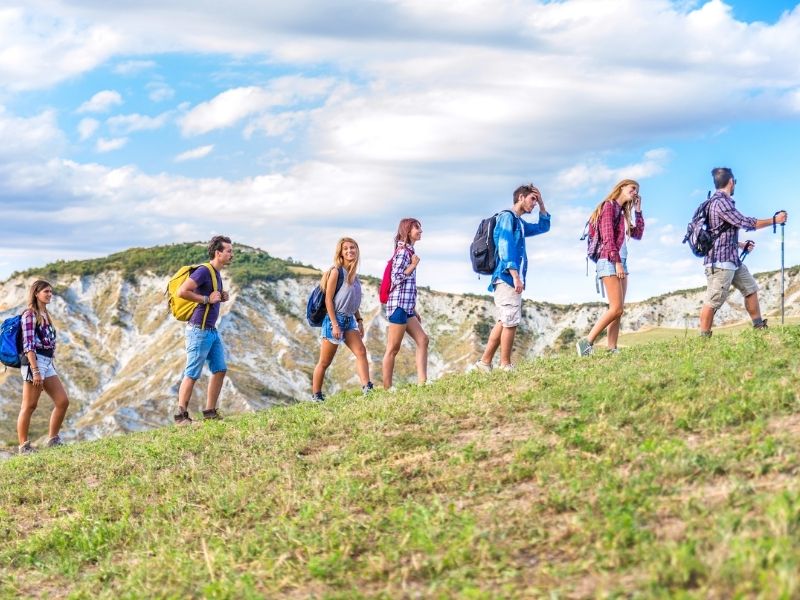
Outdoor and Recreation Careers
For people who would rather trade the studio for a trailhead, outdoor and recreation work offers a different kind of daily rhythm, one built around terrain, weather, and groups of people rather than reps and sets.
- Outdoor educator or guide, leading hikes, treks, or wilderness programs while teaching skills and safety along the way
- Recreation coordinator, planning and running programs for parks departments, resorts, or community organizations
- Parks and conservation roles, supporting land management, trail maintenance, or environmental education
- Adventure tourism work, from leading multi-day trips to managing logistics behind the scenes for tour operators
These careers put a premium on a different mix of skills than the fitness world does. Strong communication matters just as much, since group leadership depends on clear instruction and calm judgment under changing conditions, but safety awareness, risk assessment, and environmental knowledge become central rather than supplementary. Some roles require formal certifications in wilderness first aid or guiding, while others build almost entirely on field experience.
Healthcare Careers for People Passionate About Wellbeing
Healthcare might not be the first industry that comes to mind for someone who loves being active, but it draws a similar kind of person, someone who wants to help others improve their health and who thrives on staying physically engaged with the work rather than sitting behind a screen all day. Nursing, physical therapy, occupational therapy, and sports medicine roles all offer that combination, and each opens into a wide range of clinical environments and specialties.
Nursing tends to be the most flexible entry point among these paths, and it is also one that requires structured education and clinical preparation before anyone can practice. For people who already hold a bachelor’s degree in an unrelated field but feel drawn toward healthcare, accelerated ABSN programs have become a common route in. These programs are designed for career changers rather than first-time college students, building on prior education instead of starting from scratch. GCU’s ABSN program, for example, is built for exactly this kind of transition, combining coursework with local clinical rotations so students who already have a degree can prepare for licensure without repeating years of general education. Physical therapy and occupational therapy, by contrast, generally require doctoral-level training, while sports medicine roles can range from certified athletic trainers to physicians, each with its own educational timeline.
Education and Skills That Can Open Different Career Paths
Across all three categories, fitness, outdoor and recreation, and healthcare, the educational requirements differ enough that it helps to think in terms of pathways rather than one-size-fits-all advice. Some careers rely primarily on certifications and practical training, where someone can start working relatively quickly and build expertise through experience. Others require a degree, sometimes at the graduate or doctoral level, before anyone can practice at all.
The right educational route depends heavily on the specific profession someone is aiming for, not just the general field. Nursing is a good example of how varied that landscape can be. Accelerated BSN programs, including those at Northeastern University, the University of Wisconsin-Oshkosh, and Grand Canyon University, all serve the same basic purpose, helping people who already hold a bachelor’s degree in another field transition into nursing without starting their education over. The differences tend to come down to format, timeline, and location rather than the underlying value of the pathway itself, which is why it’s worth comparing more than one option before committing.
It is also worth remembering that education already earned rarely goes to waste. A bachelor’s degree in an unrelated subject, a handful of transferable credits, or years of relevant work experience can often be built on rather than set aside, which is part of what makes fields like nursing accessible to people making a genuine career change later in life.
Finding a Career That Fits Your Lifestyle
Before locking in on a direction, it helps to get specific about what kind of daily life actually appeals. How much time does someone want to spend outdoors versus indoors? How much of the job should involve working directly with people versus managing programs or systems behind the scenes; whether a clinical, structured environment sounds energizing or draining.
Practical factors matter just as much. Training timelines vary enormously, from a few weeks for some certifications to several years for a healthcare degree. Schedules differ too; some roles run on predictable weekday hours, others demand early mornings, weekends, or seasonal intensity. Earning potential and long-term growth are worth weighing honestly as well. Perhaps the most useful distinction of all is separating a genuine love for an activity from a desire to make that activity a full-time job, since the two do not always line up, and knowing the difference early can save years of second-guessing later.
Keeping Health and Adventure Part of Your Life
Not every meaningful career needs to involve hiking boots or a gym floor directly. Plenty of people build careers in fields entirely removed from fitness or the outdoors and still keep those interests central to how they live; a weekend hiking habit, a consistent training routine, or a yearly trip built around a big trek does not require a job title to justify it.
For some, that balance means choosing a career that overlaps closely with their interests. For others, it means protecting time outside of work to stay active and outdoors, treating that time as non-negotiable rather than optional. Either approach can work, and the healthiest version of a career is often one where the job and the lifestyle reinforce each other rather than compete for the same hours.
Ending Note
There is no single path from loving health, fitness, and the outdoors to building a career around them. Some routes run through formal degrees, others through certifications and field experience, and many people end up combining pieces of both over the course of their working life. What matters most is being honest about the kind of daily life someone wants, then choosing an educational and professional path that actually supports it, rather than assuming passion alone will sort out the rest.